Top 5 Use Cases of AI in Shopify Store Optimization You Can't Miss in 2026
The Shopify merchants pulling ahead in 2026 are layering AI into discovery, support, inventory, pricing, and security. This guide covers the top 5 AI use cases every merchant should be leveraging plus where the next wave is heading.
 Jul 21, 20266 min read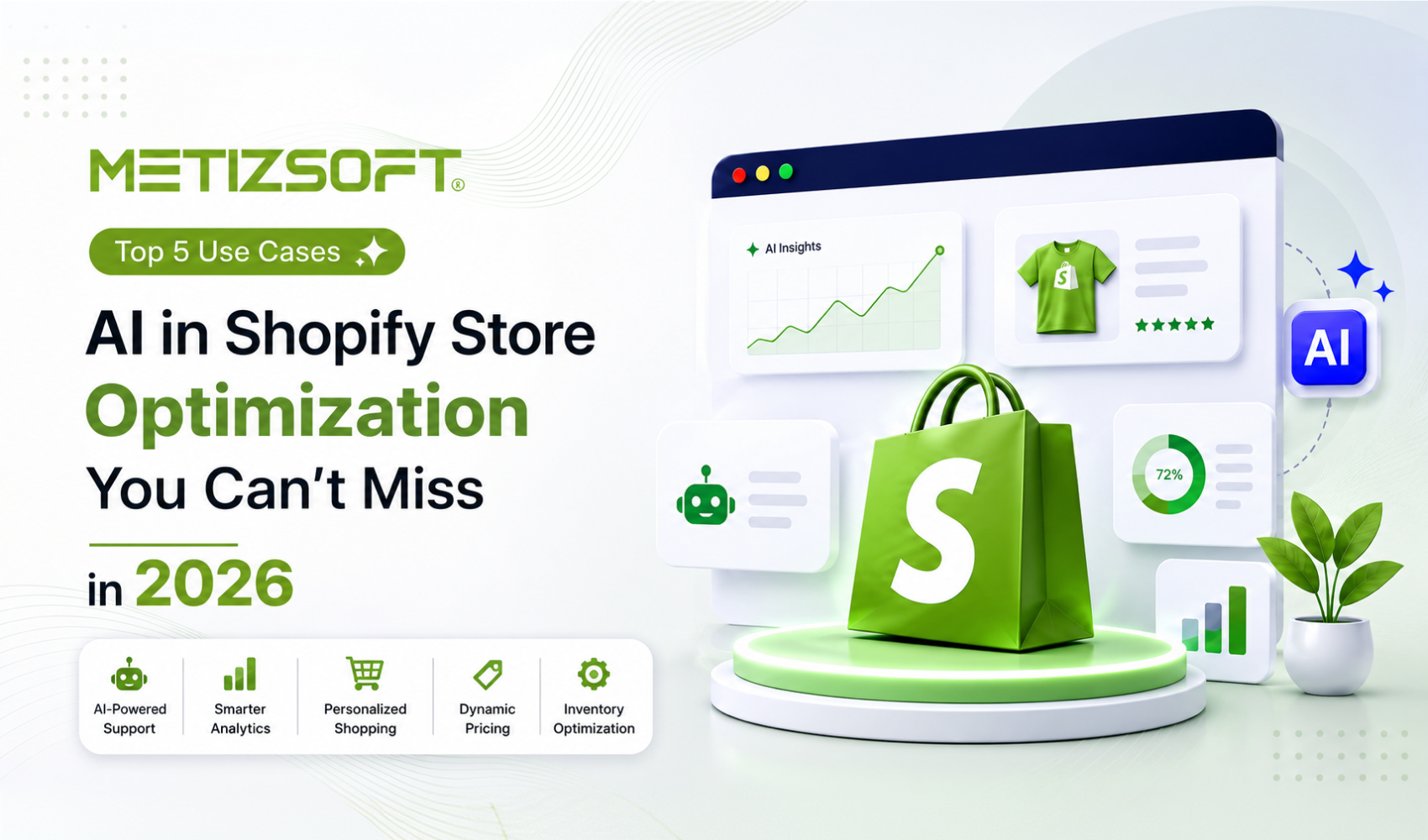
Introduction
Shopify has become the go-to platform for brands building fast, scalable online stores — but in 2026, having a Shopify store isn't enough. The merchants pulling ahead are the ones layering AI into every part of their store: discovery, support, inventory, pricing, and security.
AI is no longer an "advanced feature" reserved for enterprise brands. With the Shopify App Store now offering AI-powered tools for nearly every function, even growing D2C brands can compete with the big players if they know where to plug AI in first. Here are the top 5 AI use cases every Shopify merchant should be leveraging in 2026.
1. AI-Powered Product Recommendations
Generic "you may also like" sections are outdated. Modern Shopify stores use AI recommendation apps that analyze real-time browsing behavior, purchase history, and cart activity to surface products shoppers are genuinely likely to buy.
This isn't just about upsells; it's about building a shopping experience that feels personal, which directly improves Average Order Value (AOV) and reduces bounce rates on product pages.
In practice: Shopify brands using AI-based personalization engines commonly see AOV increases in the double digits within the first few months of implementation. |
2. AI Chatbots and Virtual Shopping Assistants
Shoppers expect instant answers about order status, sizing, returns, or product fit at any hour. AI chatbots integrated into Shopify stores now handle these conversations with natural, context-aware responses instead of rigid FAQ scripts.
Beyond support, these assistants actively recover revenue: nudging shoppers who abandon their cart, answering pre-purchase questions in real time, and reducing the load on human support teams.
In practice: Shopify stores running AI chatbot integrations report meaningful drops in cart abandonment simply by resolving shopper doubts before checkout. |
3. Visual Search and AI-Powered Product Discovery
Not every shopper knows the right words to search for what they want. AI-powered visual search lets customers upload a photo and instantly find matching or similar products in your catalog removing friction from the discovery process entirely.
For fashion, home decor, and lifestyle brands especially, this use case is becoming a genuine differentiator rather than a nice-to-have.
4. Predictive Inventory and Demand Forecasting
Stockouts during peak sales and overstocked dead inventory both hurt margins. AI-driven forecasting apps analyze historical sales data, seasonal patterns, and market trends to help Shopify merchants plan inventory with precision.
This is especially critical heading into high-volume periods festive seasons, BFCM, and flash sales when the cost of getting inventory wrong is highest.
In practice: Merchants using predictive forecasting tools consistently reduce both stockout incidents and excess inventory costs during peak seasons. |
5. AI-Driven Dynamic Pricing and Fraud Detection
AI now plays defense and offense simultaneously. On one side, dynamic pricing tools adjust prices in real time based on competitor movement, demand, and inventory levels keeping stores competitive without manual intervention.
On the other, AI fraud detection apps flag suspicious orders, fake accounts, and chargeback risks before they become costly problems, protecting both revenue and store reputation.
The Future of AI in Shopify: Beyond 2026
The next wave for Shopify stores goes further AI agents that manage entire workflows end-to-end, from customer service to inventory replenishment, with minimal manual oversight. AR-powered virtual try-ons, voice commerce, and fully autonomous store operations are no longer far-off concepts; they're already being piloted by early-adopter brands.
Merchants who start integrating AI thoughtfully today will be the ones best positioned to scale profitably tomorrow.
Shopify is also building AI directly into the platform rather than leaving it entirely to apps — our roundup of Shopify AI updates covers what shipped in the June 2025 release and what it means for merchants.
Partner with Shopify & AI Experts
Building the right AI stack for your Shopify store isn't about adding every tool available it's about identifying where AI actually moves the needle for your business. As a certified Shopify Partner and Agentic AI development company, Metizsoft helps merchants design, build, and integrate AI-powered solutions from custom Shopify apps to full store optimization — tailored to real business outcomes.
Book a free 30-minute consultation — metizsoft.com/contact
Final Thoughts
AI is reshaping what a "well-optimized" Shopify store looks like in 2026. From personalized discovery to smarter inventory and airtight fraud protection, the brands that treat AI as core infrastructure not an add-on will be the ones that scale fastest and retain customers longest.
The opportunity is here. The only question is how soon you start building for it.
Frequently Asked Questions
Which AI use case should a Shopify store start with?
Start with the area where you are losing the most revenue. If your average order value is low, begin with product recommendations. If support is overwhelming you, start with an AI chatbot. If you keep running out of stock, prioritize demand forecasting. You don't need all five at once.
Do I need to be a large brand to use AI on Shopify?
No. The Shopify App Store now offers AI-powered tools for nearly every function, many with free or affordable tiers. Growing D2C brands can access the same core capabilities that were once enterprise-only.
Will AI apps slow down my Shopify store?
Any app adds some load, and running many at once can affect speed. The key is choosing a lean, deliberate stack and having it integrated properly which is where a Shopify development partner adds value.
Can AI really reduce cart abandonment?
Yes. AI chatbots and virtual assistants resolve shopper doubts sizing, shipping, returns in real time before checkout, and can nudge shoppers who are about to abandon. Stores commonly report meaningful drops in abandonment as a result.
What comes after these five use cases?
The next wave is autonomous AI agents that run entire workflows end-to-end — customer service, inventory replenishment, and more along with AR try-ons and voice commerce. These are already being piloted by early-adopter brands.
Related Reading
Want to go deeper? Read Agentic AI in Shopify: How Autonomous Agents Are Reshaping eCommerce Operations, 20 Best Shopify Apps to Grow Your Store, and How to Speed Up Your Shopify Store.
About Metizsoft
Metizsoft Solutions is a leading eCommerce and AI development company founded in 2012, and an official Shopify Partner since 2013. With 400+ engineering specialists, 3,000+ projects delivered, and offices in India, the USA, the UK, and Singapore, we serve clients in 25+ countries. We specialise in Shopify development, Shopify app development, Agentic AI, and AI integration helping merchants turn AI into real business outcomes.
Related services: Shopify Development | Shopify App Development | Agentic AI | Hire Shopify Developer
Leave a Reply