Revolutionizing Healthcare with Agentic AI: Use Cases, Key Benefits, and Examples
Introduction The healthcare industry is undergoing a steady transformation powered by technological advancements. Among these, Agentic AI in healthcare is emerging as a revolutionary force. It brings intelligent, proactive decision-making into clinical workflows, patient care, diagnostics, and administrative operations. Unlike traditional AI, which often reacts to input, Agentic AI autonomously initiates and manages tasks, which […]
Introduction
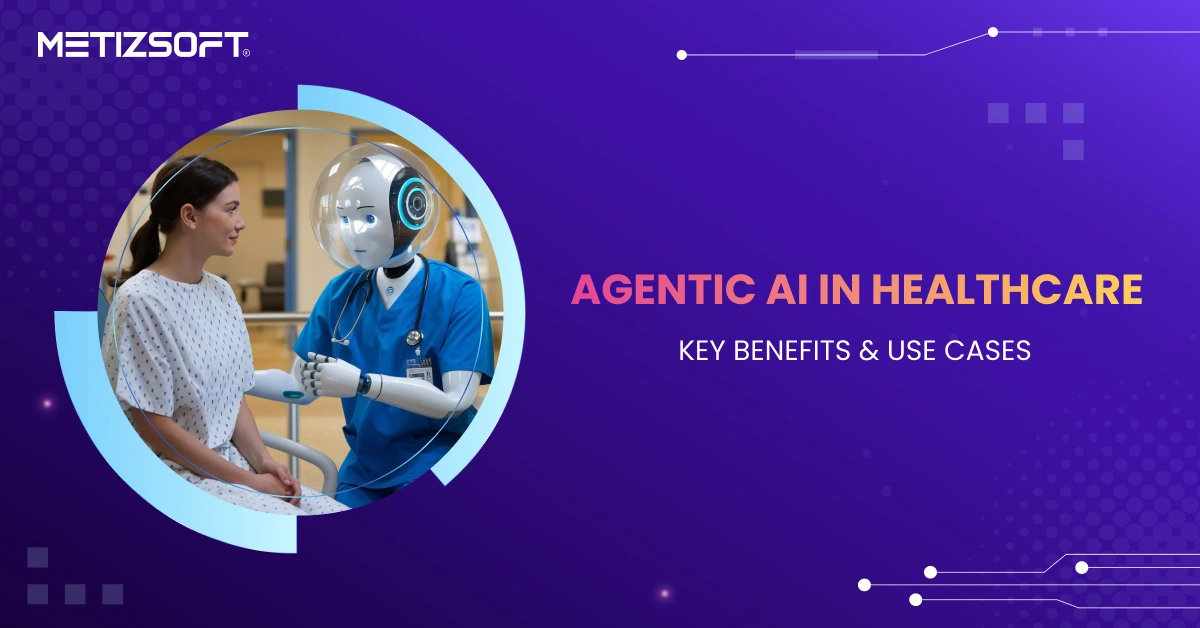
The healthcare industry is undergoing a steady transformation powered by technological advancements. Among these, Agentic AI in healthcare is emerging as a revolutionary force. It brings intelligent, proactive decision-making into clinical workflows, patient care, diagnostics, and administrative operations. Unlike traditional AI, which often reacts to input, Agentic AI autonomously initiates and manages tasks, which makes it a game-changer for modern medicine.
In this blog, we’ll explore the cases of Agentic AI being used in healthcare. We will discuss its transformative benefits, real-world examples, and how to get started with Agentic AI services.
What is Agentic AI?
Agentic AI refers to artificial intelligence systems that can operate independently with goal-directed behavior. These systems are designed to perceive, plan, decide, and act. Much like human agents, without constant external instructions. This autonomy enables them to perform complex healthcare tasks, such as monitoring patients, coordinating care, and managing hospital logistics, more efficiently and accurately.
Key Benefits of Agentic AI in Healthcare
The benefits of Agentic AI in healthcare extend beyond automation. Here are several transformative advantages:
1. Proactive Patient Monitoring
Agentic AI systems continuously monitor patient data from wearable devices, electronic health records (EHRs), and bedside monitors. They can autonomously detect early warning signs and notify healthcare providers. It helps them prevent complications before they escalate.
2. Reduced Human Error
Medical errors (no matter the size) are one of the primary causes of preventable deaths. Agentic AI enhances decision-making by analyzing vast amounts of data with precision. It reduces diagnostic errors and ensures evidence-based recommendations.
3. Improved Operational Efficiency
From managing hospital bed allocations to automating insurance claims, Agentic AI solutions in healthcare streamline administrative workflows. It reduces the burden on healthcare staff.
4. Personalized Patient Care
With the ability to analyze medical histories, genetic data, and lifestyle habits, Agentic AI creates personalized treatment plans. These systems adjust in real time based on patient responses and progress.
5. Scalable Solutions
Agentic AI can scale to meet different organizational needs, whether it’s a rural clinic or a large hospital network. It offers consistent service delivery without increasing human labor.
Real-World Agentic AI Use Cases in Healthcare
1. Virtual Health Assistants
AI-powered agents like Babylon Health or Ada Health simulate patient conversations to gather symptoms. They recommend initial care steps, schedule appointments that significantly cut down wait times, and improve access.
2. Automated Drug Discovery
Agentic AI is helping pharmaceutical companies shorten R&D cycles by predicting molecular behavior, optimizing compound structures, and even running simulations for clinical trials.
3. Chronic Disease Management
Agentic systems help patients with chronic conditions such as diabetes or hypertension by tracking symptoms, reminding them to take medications, and adjusting plans based on behavior and vitals.
4. Medical Imaging and Diagnostics
Tools like Aidoc or Zebra Medical Vision use Agentic AI to analyze CT scans, MRIs, and X-rays in real time. These tools flag potential anomalies and prioritize urgent cases for review.
5. Hospital Resource Management
AI-driven agents are deployed to manage hospital inventory, predict patient inflow, and allocate rooms or beds efficiently. They also reduce resource wastage, which is vital for pandemic preparedness.
How Agentic AI Is Driving Healthcare Transformation
The switch from reactive to proactive healthcare is one of the most promising aspects of AI-driven healthcare transformation. Agentic AI’s ability to autonomously collect data, derive insights, and take actions allows for:
- Faster decision-making: Speed is critical in healthcare. AI agents can instantly process patient information faster than human teams and flag actionable insights.
- Remote care enablement: Agentic AI plays a vital role in telemedicine and home care by enabling continuous monitoring and remote diagnostics.
- Equitable care access: With scalability and automation, Agentic AI can serve under-resourced or rural communities, reducing healthcare disparities.
Challenges and Considerations
While the potential is enormous, implementing Agentic AI services in healthcare comes with challenges:
- Data privacy and compliance: Healthcare data is sensitive. Ensuring HIPAA or GDPR compliance is non-negotiable.
- Integration with existing systems: Agentic AI must seamlessly integrate with EHRs and hospital management systems.
- Ethical concerns: Decision-making by AI, especially in life-critical situations, must be transparent and ethically guided.
- Human-AI collaboration: Agentic AI is not a replacement for healthcare workers. Instead, it must augment human capabilities.
How to Get Started with Agentic AI in Healthcare
If you’re a healthcare provider, hospital, or digital health startup looking to leverage the benefits of Agentic AI, here’s how to begin:
1. Define Your Use Case
Begin by identifying the key points in your workflows, whether it’s patient triage, appointment scheduling, or diagnostics.
2. Consult with Experts
Work with companies offering Agentic AI services to assess feasibility, compliance, and scalability. They’ll help you with integration, data security, and model customization.
3. Hire AI Developers
To build a custom solution, it’s crucial to hire AI developers with experience in healthcare applications. Look for developers who understand both AI algorithms and the unique demands of clinical environments.
4. Pilot and Scale
Run a controlled pilot to assess performance, accuracy, and usability. The system will be gradually rolled out across departments or branches based on the outcomes.
Future of Agentic AI in Healthcare
With advancements in computational power and improved data accessibility, the future of Agentic AI in healthcare looks promising. We can expect:
- Autonomous clinical decision support tools
- AI-led remote surgeries with robotic integration
- Predictive modeling for epidemics
- AI-powered mental health therapy agents
The potential of Agentic AI in healthcare is not just to assist, but to transform the entire ecosystem.
Final Thoughts
The healthcare sector stands solid on the brink of a significant revolution, and Agentic AI is at its core. From improving diagnostics to enabling personalized treatments and automating operations. By exploring Agentic AI use cases in healthcare and strategically integrating these into sole care.
Whether you’re a hospital system, a startup, or a healthcare innovator, now is the time to embrace Agentic AI. Work with trusted providers, invest in skilled talent, and begin your journey toward AI-driven healthcare transformation.

Leave a Reply