Zero Trust Security: Key to Modern Product Architecture
Discover how Zero Trust Security transforms product architecture. Explore key strategies for secure design, development, and deployment.
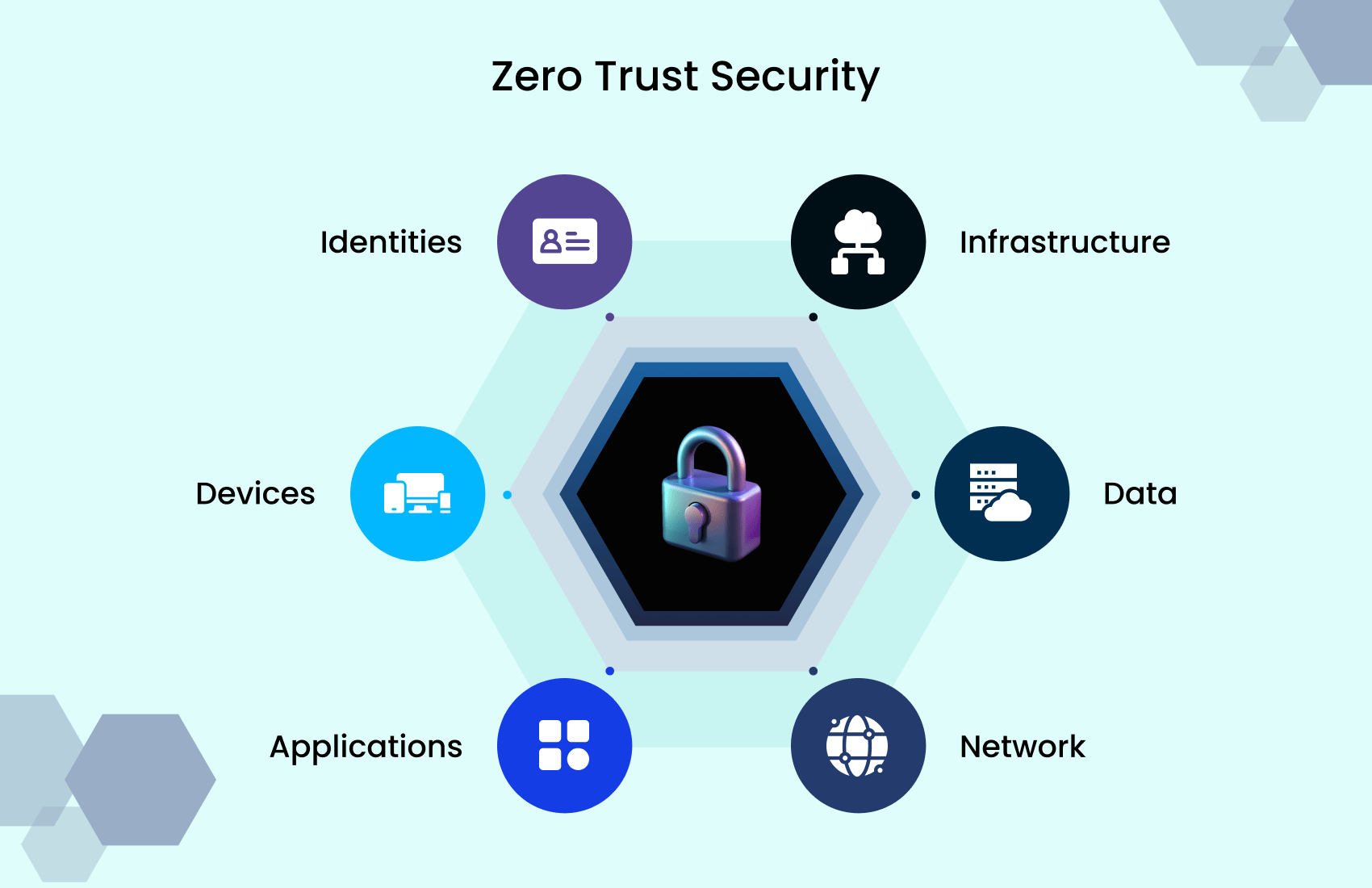
New threats emerge every second in this digital battlefield. Somewhere, right now, people are trying to breach into networks, exfiltrate data, and compromise systems deemed “secure.” The sobering reality is that traditional security measures have failed us. But, amidst all the chaos, a new revolutionary approach has emerged – Zero Trust Product Architecture. Not another security framework, but an entirely new paradigm that has revolutionized the way modern digital enterprises protect themselves.
Remember when we thought a strong firewall and some antivirus software were enough? Those days feel like ancient history now. With remote teams spread across continents, cloud services hosting critical data, and IoT devices popping up like mushrooms after rain, our old security models look as effective as using an umbrella in a hurricane.
The Core Principles: Trust Nothing, Verify Everything
Zero Trust isn’t about adding more locks to your doors. It’s about fundamentally changing how we think about security. Imagine if every time someone in your building wanted to do anything – open a door, use the printer, access a file – they had to prove who they were. Sounds annoying, right? Now imagine if this verification happened so smoothly that people barely noticed it. That’s what modern Zero Trust looks like when done right.
At its heart, Zero Trust Product architecture operates on a simple yet powerful premise: never trust, always verify. Every request, regardless of its origin, must be authenticated and authorized. This approach transforms security from a perimeter-based model to a comprehensive, identity-centric framework that validates every digital interaction.
Building Blocks of Zero Trust Implementation
The foundation upon which modern Zero Trust is built is in robust identity management. Trust has shifted away from this location-based “Are you inside our network?” to an identity-based “Can you prove who you are?” trust model. And that shift goes far beyond just introducing multi-factor authentication; this requires complete re-crafting of access controls altogether.
The Building Blocks: Creating a Product Architecture of Suspicion
Let’s break this down into practical pieces you can actually use:
- Identity Verification That Never Sleeps
Gone are the days when logging in once was enough. Modern Zero Trust systems constantly ask, “Are you still you?” But here’s the clever part – they do it without driving users crazy. They look at how you type, what resources you typically access, and what time you usually work. Suddenly, security becomes contextual and continuous rather than a series of frustrating checkpoints. - Micro-segmentation: Creating Digital Panic Rooms
Think of your network like a hotel. Traditional security was like having a tough bouncer at the front door, but once people got in, they could wander anywhere. Micro-segmentation turns every room into a vault with its own unique key card. Even if someone breaks into one room, they can’t access the others. When a financial services firm implemented this approach, they contained a ransomware attack to a single department instead of watching it spread through their entire network. - Continuous Monitoring: Your Digital Security Camera
This isn’t your grandfather’s security monitoring. Modern tools like Splunk and Datadog act like an AI security guard that never sleeps and learns what’s normal for your organization. When a developer who usually accesses code repositories suddenly starts poking around in customer payment data at midnight, the system raises red flags before damage can be done.
The Toolbox: What You Need
Let’s talk about the tools that make this possible, but with a twist – focusing on what works in the real world:
- Identity and Access Management (IAM)
Okta and Azure Active Directory lead the pack here, but it’s not just about buying the right tool. It’s about configuring it to match how your people work. A tech company in Seattle saw its support tickets drop by 60% when it mapped its IAM rules to real work patterns instead of rigid security templates. - Endpoint Protection That Makes Sense
CrowdStrike and Carbon Black do great work here, but success lies in how you use them. Smart companies are moving beyond simple “install and forget” approaches. They’re using these tools to understand device behavior patterns and spot anomalies that matter, not just technical violations. - Network Control That Doesn’t Drive People Crazy
Tools like Cisco ISE can be powerful allies or giant headaches. The difference? The implementation considers human behavior. One manufacturing firm reduced security incidents by 70% while improving employee satisfaction by designing their access controls around common work patterns.
The Human Side: Where Most Zero Trust Initiatives Live or Die
Here’s the part most organizations skip: Zero Trust is as much about people as it is about technology. The best security Product architecture in the world fails if people start looking for ways around it. Smart organizations are treating this as a culture change project, not just a technical implementation.
Making It Real: Practical Steps Forward
Starting your Zero Trust journey doesn’t mean ripping out your entire security infrastructure overnight. Smart organizations begin with these steps:
- Map your crown jewels – know what you’re protecting and why
- Watch how people work, not how you think they work
- Start small – pick one critical application or dataset
- Build security that helps rather than hinders
- Measure what matters – focus on outcomes, not just compliance
Looking Ahead: The Future of Zero Trust
As AI and quantum computing reshape the threat landscape, Zero Trust becomes even more critical. We’re seeing organizations experiment with AI-driven authentication systems that can predict threats before they materialize. Some are already preparing for post-quantum cryptography, ensuring their Zero Trust Product architecture will stand up to tomorrow’s threats.
The Price of Inaction
Every day you stick with traditional security models is a day you’re accepting unnecessary risk. The average cost of a data breach hit $4.35 million in 2023. But here’s the real kicker – organizations with mature Zero Trust Product architectures spent 20% less on breach recovery and contained incidents 35% faster.
The Road Forward
Zero Trust isn’t something to check off a road map. It’s a fundamental shift in how we approach security in a world where the perimeter has disappeared. The real question isn’t whether Zero Trust is for you or when you might adopt this practice, but how soon can you alter your Product architecture in response to today’s threat?
As you start this journey, remember: that perfect security doesn’t exist, but resilient security does. Zero Trust isn’t about building walls that cannot be penetrated but about assuming they have already been breached and acting accordingly. In a world where digital trust has become a liability, Zero Trust has become our best path forward. The time for half-measures and incremental improvements has passed. The future belongs to organizations that can adapt to this new reality. Are you ready to join them?

Leave a Reply