RIDE-SHARING AI DEMAND FORECASTING AUTOMATION
How we built an AI-powered demand forecasting engine that reduced wait times by 34%, boosted driver efficiency by 41%, and achieved 87% forecast accuracy moving ride-sharing from reactive chaos to proactive intelligence using ML models, real-time event feeds, and continuous learning.
Reactive Systems Failing at Peak Demand
Ride-sharing platforms were running on purely reactive models riders request, drivers respond. When demand spiked during events, rain, or rush hours, the system collapsed: long queues, unavailable drivers, cancelled rides, and lost revenue.
Demand Surge Blindness
No visibility into upcoming demand spikes from events, weather, or traffic dispatch teams reacting after queues formed instead of pre-positioning drivers where riders would need them.
Driver Underutilization Off-Peak
Drivers clustered in wrong zones during low-demand periods returning empty after each trip instead of pre-positioning for the next surge zone identified by predictive data.
Static Surge Pricing
Reactive surge pricing triggering only after demand peaked missing the revenue optimization window and frustrating riders with sudden unexplained price jumps.
Long Wait Times at Events
Concert ends, stadium empties hundreds of simultaneous requests overwhelming available supply. Wait times spiking to 20-30 minutes and riders abandoning the platform for competitors.
No Learning from History
Each demand event treated as new no intelligence accumulated from past patterns, weather correlations, or event calendars to improve future predictions.
At Metizsoft, we don't just rebuild stores we own the outcome. Three pillars: earn belief, personalize discovery, then loop the customer back in.
Three Pillars to Move from Reactive to Proactive
A continuously learning ML forecasting engine processing real-time event feeds, traffic data, and weather signals to anticipate demand before it arrives.
See Demand Coming
Multi-signal forecasting combining event calendars, weather feeds, traffic patterns, and historical booking data predicting demand hotspots 30-60 minutes before they materialize.
Pre-Position Drivers
Demand heatmaps pushing actionable nudges to drivers' Flutter apps directing supply to predicted surge zones before rider requests arrive, cutting wait times dramatically.
Get Smarter Every Ride
Continuous model retraining on every new ride request, cancellation, and weather event each data point sharpening prediction accuracy, making the system more reliable over time.
From Reactive Chaos to Proactive Intelligence
A continuously learning ML forecasting engine that processes real-time event feeds, weather signals, and traffic data pre-positioning drivers before demand arrives, not after.
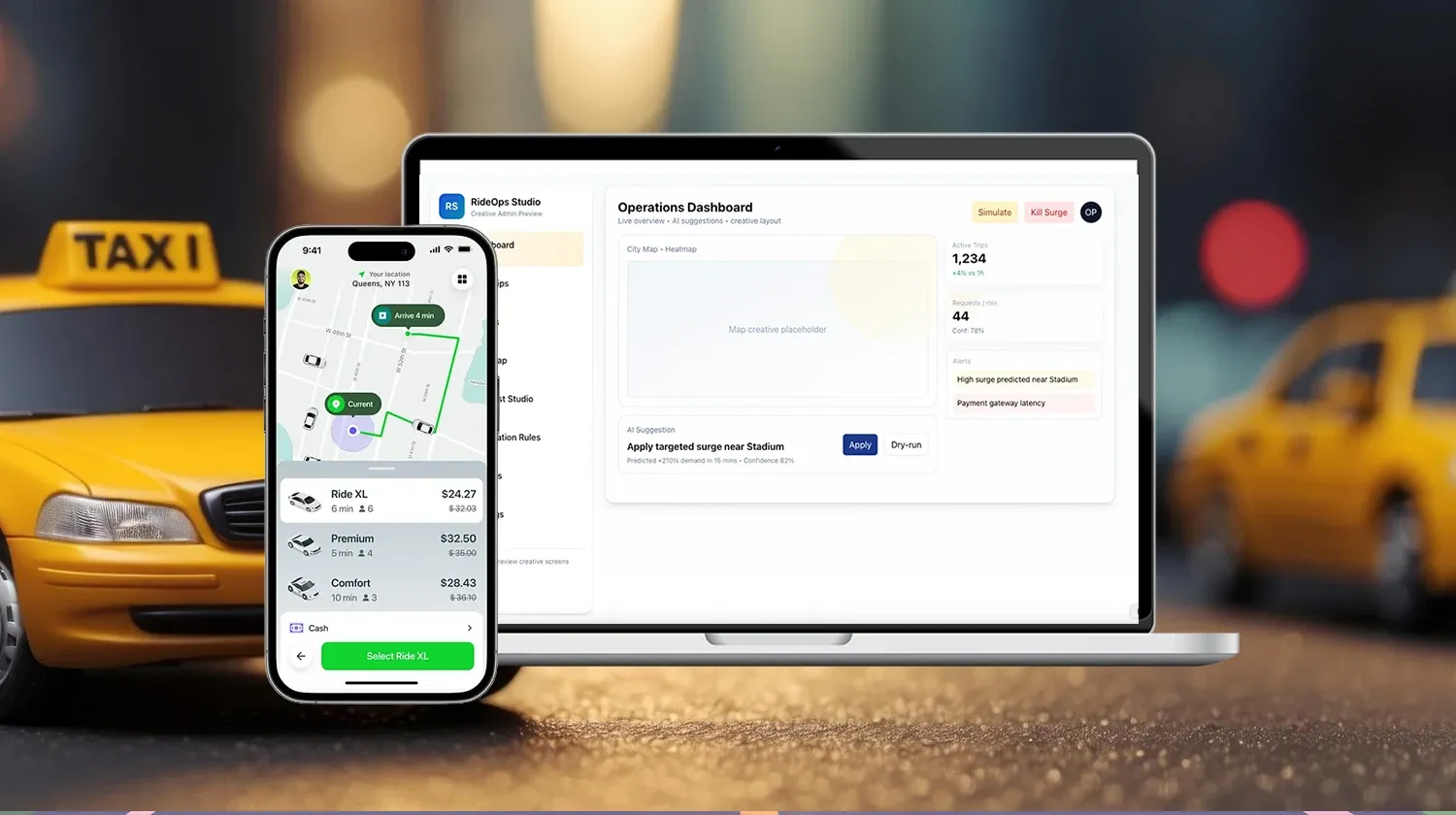

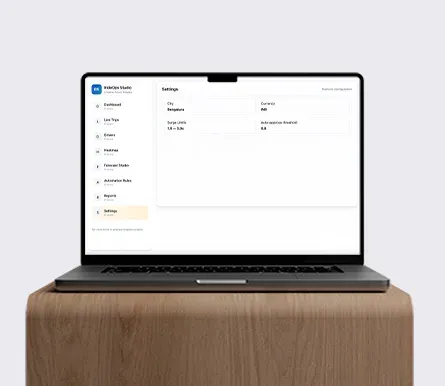
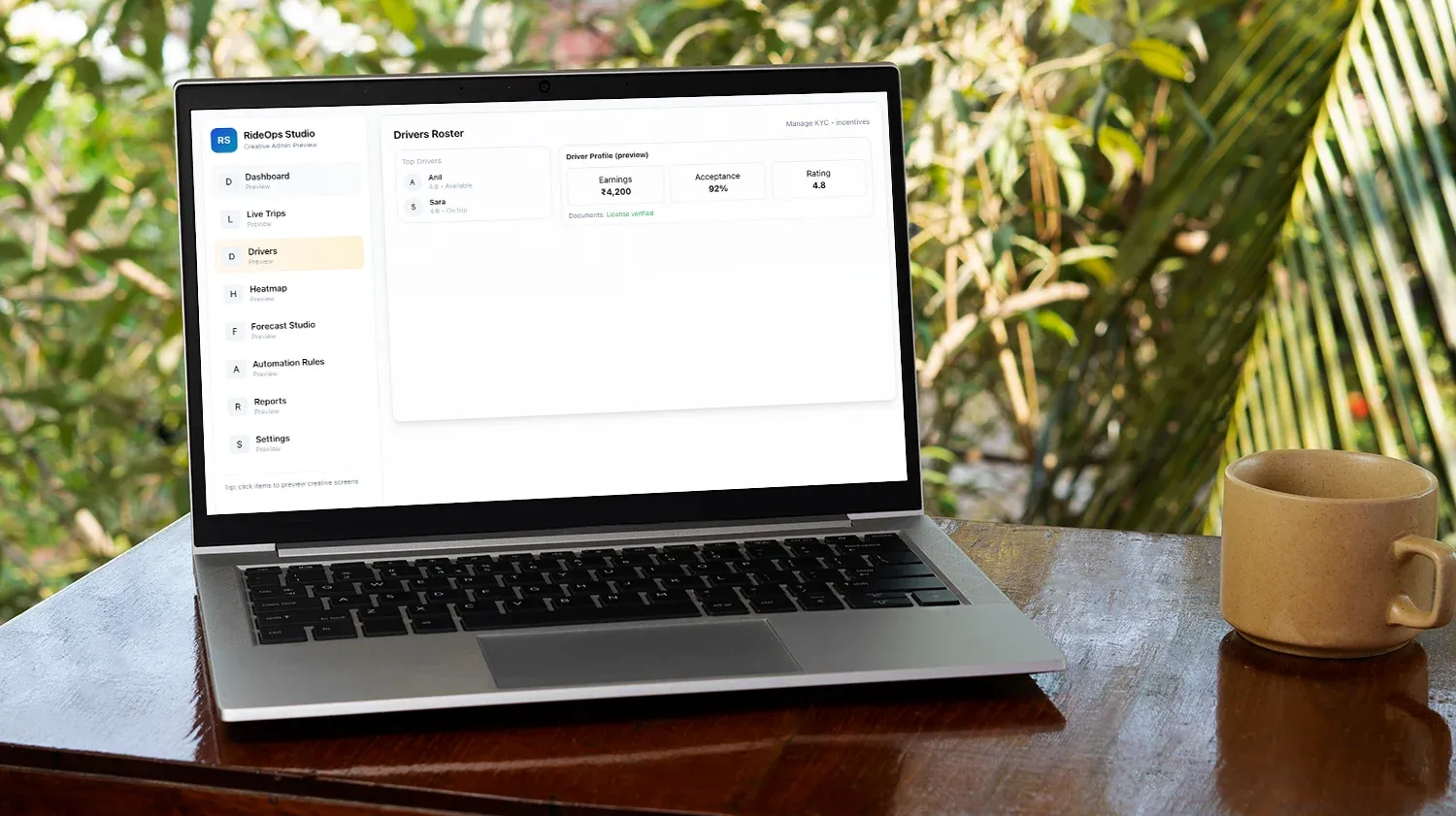

Six Things We Built That Moved the Needle
AI forecasting features transforming ride-sharing from reactive operations to proactive intelligence.
Event & Weather Data Feeds
Real-time integration with event calendars, weather APIs, and local activity feeds concerts, festivals, and storms instantly adjusting demand forecasts as events are detected, 30-60 minutes ahead.
Traffic Patterns & City Flow
Peak-hour road congestion factored into both driver supply distribution and smart surge pricing recommendations ensuring drivers are positioned where roads are clear and demand is highest.
Demand Heatmaps
Dynamic visual overlays on the dispatch dashboard highlighting upcoming hotspots operators pre-positioning drivers to predicted surge zones before rider requests overwhelm supply.
Continuous Model Training
Every new ride request, cancellation, and weather event sharpens prediction accuracy the system accumulates intelligence with each data point, improving forecast reliability over time.
Smart Surge Recommendations
Measured price adjustment suggestions based on predicted demand clusters not reactive spikes that frustrate riders, but proactive recommendations that optimize revenue while maintaining service quality.
Rider Behavior & Historical Patterns
ML models studying booking patterns, pick-up habits, cancellation trends, and weather correlations learning demand cycles to predict not just where, but when riders will need vehicles.
From Brief to Launch, in 12 Weeks
Discovery & Data Mapping
Deep-dive operations audit to identify demand blind spots, map all data sources historical bookings, weather APIs, event feeds and select the right ML forecasting model for the platform.
Core Forecasting Engine
Built the ML forecasting model from the ground up integrating live event calendars, weather APIs, traffic signals, and continuous training pipelines to predict demand hotspots 30–60 minutes ahead.
Apps & Dispatch Dashboard
Developed the Flutter driver app with real-time zone nudges, built the dispatch dashboard with live demand heatmaps, and deployed the smart surge recommendation engine for operators.
Testing & Production Launch
Ran real-world demand validation, benchmarked forecast accuracy against live ride data, completed fleet onboarding and training, and deployed the full system to production environment.
Numbers that moved in 60 days
SCALABLE AI PATIENT MANAGEMENT SYSTEM
How we built a HIPAA-compliant, cloud-native patient management platform that improved patient outcomes by 63%, enhanced billing accuracy by 47%, and boosted operational efficiency by 58% using AI-driven predictive analytics, automated compliance, and seamless EHR integration on AWS.